Dashed Lined Ruled Tracing: The Ultimate Handwriting Guide Font
Imagine a font that doesn't just display letters, but actively teaches how to write them. For educators, parents, and designers creating learning materials, this is the creative breakthrough that transforms a simple worksheet into an interactive guide. The Dashed Lined Ruled Tracing font set is precisely that tool, engineered to build foundational handwriting skills with clarity and structure.
What Makes This Font Set Unique?
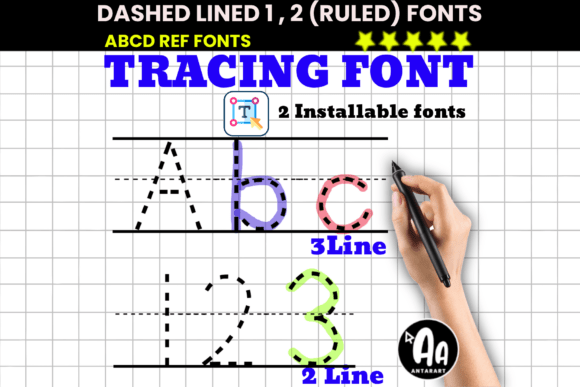
This isn't a standard typeface. It’s a specialized 2-font pack where each character is a dashed (or dotted) outline, meticulously positioned directly on ruled baselines. This design provides a built-in guide for proper letter formation and placement. The set includes two key variations:
- 2-Line Ruled: Features a baseline and a midline, ideal for teaching lowercase letter height and ascenders/descenders.
- 3-Line Ruled: Adds a top line for uppercase letters, offering comprehensive guidance for full alphabet practice.
By combining the tracing pathway with the writing lines, the Dashed Lined Ruled Tracing font removes the guesswork. Students learn not only the shape of each letter but also its spatial relationship on the line—a critical skill for developing neat, consistent handwriting.
Creative Applications Beyond the Classroom
While its primary use is for educational printables, the font's structured aesthetic opens doors for various design projects. Consider its value in creating:
- Interactive Worksheets & Books: Design custom tracing pages, alphabet practice sheets, and handwriting workbooks that feel professional and pedagogically sound.
- Classroom & Bulletin Board Decor: Create visually consistent headers, name tags, and labels that reinforce learning objectives.
- Personalized Learning Tools: Generate editable student name templates or back-to-school review packets with a clean, instructional look.
- Digital Educational Content: Develop resources for tablets or interactive whiteboards where the dashed lines serve as on-screen guides.
The font’s clean, instructional style can also lend a thoughtful, crafted feel to certain branding for tutoring services, children’s book titles, or educational app interfaces, where clarity and approachability are paramount.
Tips for Choosing and Using This Typeface
To get the most from a creative font asset like this, thoughtful selection and application are key.
Match the Mood to the Mission: This is a purpose-driven, instructional font. It excels in contexts focused on learning, precision, and clarity. For projects requiring whimsy, elegance, or bold impact, pairing it with a contrasting display font or script font for headlines can create effective hierarchy.
Test Readability in Context: Always preview the font at the size you intend to use. Its dashed design is optimized for tracing practice, so ensure it remains legible in your final layout, whether on a printed page or a screen.
Review the Glyph Set: The pack includes uppercase, lowercase, numbers, and common symbols. For projects requiring Spanish characters or extended punctuation, you may need to supplement with another typeface. Always check the character map before finalizing a design.
Understand the License: Confirm the font license covers your intended use, whether for personal classroom resources or commercial products you plan to sell. This ensures your project remains compliant and professional.
Pair with Complementary Fonts: Combine the Dashed Lined Ruled Tracing font with a clean sans serif font for body text or instructions. This pairing maintains readability while allowing the tracing font to serve its unique, functional purpose.
Elevating Your Design with Purposeful Typography
The right font does more than convey words; it communicates intent, supports function, and enhances visual consistency. A well-chosen premium font like the Dashed Lined Ruled Tracing set becomes a valuable design asset, saving hours of manual guideline creation and ensuring a polished, professional result. It’s a testament to how thoughtful typography can directly support learning outcomes and make design work both meaningful and effective.